Monday, November 7, 2011

Jazz launches Eidi Offer

Mobilink Jazz is offering Eidi to its subscribers, with ‘reconnect and recharge’ offer that promises free minutes for all Jazz customers who have not used their SIM since the first (1st) of October 2011.

Offer Details:

Each eligible customer who subscribes to this offer will receive 50 free Mobilink minutes every day for ten (10) days after Eid i.e. from November 11 to November 20.

How to Avail Offer:

To avail this offer, customers can simply start to reuse their Jazz SIMs before 8 November and send a blank SMS to 452.

One-time SMS charges to 452 are Rs 10 plus tax

Saturday, October 29, 2011

Zong Introduces Weekly Internet Package

zong thumb Zong Introduces Weekly Internet PackageAfter monthly, hourly and various other bundles – Zong today introduced a weekly internet GPRS bundle that will help customers to use GPRS while on the go without looking at their counters.

Keep reading to know the details:

Zong Weekly Internet Details:
  • First time Subscription Charges: Rs. 10
  • Weekly Charges: Rs. 35
  • Flexi Minutes (Weekdays): 120 Minutes every day
  • Flexi Minutes (Saturday & Sunday): 48 Hours
  • Charges after Flexi minutes: Rs. 0.25 per minute

Note: GST and other taxes are not applicable on GPRS usage

What are Flexi Minutes:

Flexi minutes are basically the free minutes that you can use without paying anything (other than weekly charges). So if you use less than 120 minutes in a day then you won’t have to pay anything extra. Saturday and Sunday are flat free.

For instance if you have consumed 120 flexi minutes in one day – then you will be charged Rs. 0.25 per minute for rest of the day – however internet usage during Saturday and Sunday will remain free.

How to subscribe Zong Weekly Internet Package:
Though USSD: Call the USSD *910#
Through SMS: SMS “sub<space>weekly” to 906 for package subscription.
Your subscription will be renewed automatically after 7 days.

How to unsubscribe Weekly Internet Package?
SMS “unsub” to 909 to unsubscribe from this package
Charges for sending sms to 909 are Rs. 5/sms

Friday, October 21, 2011

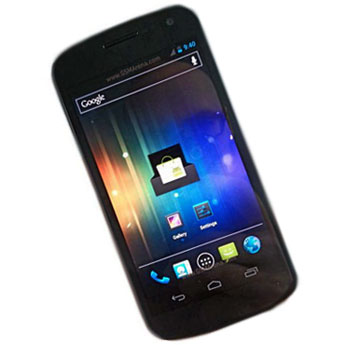
Behind the glass: a detailed tour inside the Samsung Galaxy Nexus

By now, the specs on the Samsung Galaxy Nexus are already publicly known, but what other magic is hiding within all the wires and circuitry? To find out, we've enlisted the help of developer Francois Simond (SuperCurio) to break down as many of the inner components of the Android 4.0-loaded device as possible. And while there isn't anything particularly earth-shattering revealed here, we at least have a better idea of the kind of wizardry taking place underneath that bedazzling HD display. Read on with us to learn all of the deliciously nerdy details. 

Here are a few things we unearthed in the Galaxy Nexus:

Silicon
  • CPU: Texas Instruments OMAP4460, 2047.7 BogoMIPS
  • GPU: Imagination Technologies PowerVR SGX 540 (same as the Galaxy S and Nexus S, though this one uses a higher clock speed at 384MHz)
  • WiFi / Bluetooth module: Broadcom BCM4330 (same as in the Galaxy S II)
  • Audio codec: Texas Instruments TWL6040
  • HDMI: Silicon Image MHD SiI9234 transmitter over MHL (same as Infuse 4G and GSII)
  • USB Switch: Fairchild semiconductors fsa9480 (industry standard)
  • Framebuffer controller: Samsung S6E8AA0 MIPI LCD with Gamma correction driver

Sensors
  • Geomagnetic sensor: Brand new tri-axial Yamaha YAS530
  • TouchScreen sensor: Melfas MMSxxx touchscreen
  • Optical / proximity sensor: GP2A (same as Galaxy S and Nexus S)
  • Barometric pressure sensor: BOSCH BMP180 (first of its kind in a smartphone)
  • Triaxial acceleration sensor: BOSCH BMA250
  • Triple Axis MEMS Gyroscope: InvenSense MPU3050
  • Fuel Gauge (algorithm to track battery's state of charge): MAXIM MAX17040

Misc. internals
  • Facial recognition elements (Face Unlock): left eye, right eye, nose base, head, face
  • Available resolution for standard apps: 720 x 1184px
  • Refresh rate: 60Hz
  • LCD Density: 320
  • Default display color depth: 32bit
  • Camera uses OMAP Ducati Subsystem, on-screen preview size is 768 x 576
  • Linux kernel: 3.0.1 compiled for SMP with voluntary kernel preemption for best interactivity
  • Android ROM: version 4.0.1, built October 13, 2011
  • Device name: Maguro
  • Main input/output type supported: Headphone, Speaker, Microphone, Bluetooth, Voice, FM, S/PDIF over HDMI; USB Audio DAC (digital-to-audio converter with USB input and stereo outputs) should also be supported
[Thanks, Francois]

The Galaxy Nexus' Super AMOLED display is a minus, not a Plus


For all the buzz around Samsung's latest hi-def smartphone, the absence of one little word has largely been glossed over. That word is "Plus" -- the wizened Galaxy S II has a "Super AMOLED Plus" display, for example, whereas the sparkly Galaxy Nexus is merely "Super AMOLED." Did the marketeers simply forget those extra hyperbolic keystrokes, or does the difference actually mean something?
Well, regrettably, it does. Samsung uses "Plus" to refer to full RGB displays, in which each pixel possesses its own trio of red, green and blue sub-pixels. Meanwhile, a non-Plus display uses a cheaper PenTile system -- which forces pixels to share each other's sub-pixels. Aside from potential hygiene issues, this results in a lower overall sub-pixel density, reduced sharpness and worse color rendition. We saw the difference clearly enough when Engadget Spanish microscopically compared the original non-Plus Galaxy S against the GS II, and now the folks at FlatPanelsHD have undertaken a more up-to-date comparison at the source link. The upshot? They calculated that, despite its 4.65-inch screen size, the Galaxy Nexus has the same number of sub-pixels as the 3.5-inch iPhone 4/4S. Think of a word with no r, g or b in it, and you eventually arrive at "disappointed."

sourceFlatPanelsHD

Samsung's Galaxy Nexus gets official: Android 4.0, 4.65-inch HD Super AMOLED display

Wait no more. Google and Samsung have just made the long-awaited Galaxy Nexus (not longer theNexus Prime, as we'd once heard) official here in Hong Kong, and the specifications are downright drool-worthy. Those with bantam hands need not apply, as this 4.65-inch behemoth is bound to bring back talk of Sidetalkin'. Naturally, Ice Cream Sandwich is onboard, with Google finally revealing the version number as 4.0. Other specs include an HD Super AMOLED display (1,280 x 720), a 1.2GHz dual-core processor, 5 megapixel rear camera (with LED flash), a 1.3 megapixel front-facing cam, 1080p video recording and playback, a newfangled panorama mode, a 3.5mm headphone jack and Bluetooth 3.0. You'll also find USB 2.0, 802.11a/b/g/n WiFi, an embedded NFC module, accelerometer, compass, gyro, proximity sensor and even a barometer -- yeah, a barometer. Finishing things out, there's 1GB of RAM, 16 or 32GB of internal storage space and a 1,750mAh battery. As for radios? There's an HSPA+ model on tap, while an LTE version will "be available depending on region." There's nary a mention of carrier in the press release we're holding, but based on earlier leaks, a 4G build for Verizon Wireless seems a lock.

Focusing on Ice Cream Sandwich for a tick, Android 4.0 will bring "an entirely new look and feel to Android," boasting a redesigned user interface, bolstered multitasking / notifications, full-on NFC support and a new People app, which enables users to browse friends, family and coworkers' photos whilst peeking their status updates from Google+. ICS also introduces Face Unlock, which taps into facial recognition protocols in order to unlock your handset. And then there's Android Beam, an NFC-based technology that allows you to "quickly share webpages, apps and YouTube videos by simply tapping two phones together." According to Goog, the "lock screen, home screen, phone app and everything in between has been rethought and redesigned," and this is quite the beastly phone to launch with. Pics and a link to register for more info await you below, and PR per usual is after the break.

Android 4.0 Ice Cream Sandwich

Android 4.0 Ice Cream Sandwich is now official.

Here's what you need to know about the latest version of Google's mobile OS which combines the best of the Android 2.x phone interface with the Android 3.x Honeycomb tablet interface.

Ice Cream Sandwich is designed for use with both phones and tablets.
Android 4.0 Ice Cream Sandwich features

Android ICS offers a massive array of improvements over its predecessors bringing the best of both Gingerbread and Honeycomb while providing a raft of new innovations.

The company says 4.0 is a complete rethink of Android's image and is part of a push to make the OS "Enchant me, Simplify My Life, and Make Me Awesome."


"Android 4.0 builds on the things people love most about Android," says Google in a post on the Android Developers Blog. "Easy multitasking, rich notifications, customizable home screens, resizable widgets, and deep interactivity — and adds powerful new ways of communicating and sharing."


Minor improvements include better copy and paste, data logging and warnings and, at last, the opportunity to easily grab screenshots by holding down the power and the volume buttons.

The keyboard and dictionaries have also been revamped, says Google. "Error correction and word suggestion are improved through a new set of default dictionaries and more accurate heuristics for handling cases such as double-typed characters, skipped letters, and omitted spaces. Word suggestion is also improved and the suggestion strip is simplified to show only three words at a time."

"To fix misspelled words more easily, Android 4.0 adds a spell-checker that locates and underlines errors and suggests replacement words. With one tap, users can choose from multiple spelling suggestions, delete a word, or add it to the dictionary."


The new OS is designed to bring common actions to the fore, with better animations and an entirely new typeface - more on that shortly.
Android 4.0 Ice Cream Sandwich Galaxy Nexus

Google kicked off its launch event by announcing the Samsung Galaxy Nexus, which will be the first device to run Ice Cream Sandwich and will be launched in November. Check out Samsung Galaxy Nexus: what you need to know.


Android 4.0 Ice Cream Sandwich update

Google has confirmed it is working on an Android 4.0 update for the Samsung Nexus S and other Android devices.

Director of Android operating system User Experience Matias Duarte told Engadget that Google is. "Currently in the process for releasing Ice Cream Sandwich for Nexus S. Theoretically it should work for any 2.3 device."

Motorola confirmed to TechRadar that the Motorola Razr will launch in the UK with Android 2.3, but that there will be an update to 4.0in 2012.
Android 4.0 Ice Cream Sandwich Roboto

Among the first new features championed by Google at the Hong Kong media event was a brand new typeface for Android in the shape of the easy-to-read "Roboto."
Android 4.0 Ice Cream Sandwich System Bar and Action Bar

At the launch event, Google showcased a host of virtual buttons that appear at the bottom of the screen in some apps and allow users access to areas of the device like phone and contacts.

These are located in the System Bar - present in all apps - and enables you to navigate instantly to Back, Home, and Recent Apps. Virtual buttons are present across all apps, but can be dimmed by applications for full-screen viewing.

You can also access the contextual options for each app in the Action Bar at the top of the screen.
Android 4.0 Ice Cream Sandwich voice control

Android 4.0 introduces new voice input engine, You can dictate the text you want, for as long as you want. After dictating, you can tap the underlined words to replace them from a list of suggestions.
Android 4.0 Ice Cream Sandwich multitasking

Multi-tasking has also been given a boost and with ICS it's easier to see which apps you've been using recently. If you decide you're done with using one, you can easily flick it away to close.

Google says it has made multitasking "even easier and more visual" on Android 4.0. The Recent Apps button lets users jump instantly from one task to another using the list in the System Bar. The list pops up to show thumbnail images of apps used recently — tapping a thumbnail switches to the app.


Android 4.0 Ice Cream Face Unlock

Perhaps the most 'Star Trek' of all the new Android 4.0 features is a new piece of functionality called Face Unlock which, as the name suggests, unlocks your handset based on facial recognition tech.


You can also do more without unlocking. As in iOS 5 you can jump straight to the camera. You can also pull down the notifications window.
Android 4.0 Ice Cream Sandwich Home Screen folders

Like iOS before it, Android is now getting home screen folders too. You can group apps or shortcuts together and, as with iOS, you can do this just by dragging icons on top of one another.From the All Apps launcher, you can now drag an app to get information about it or uninstall it should you wish.


Android 4.0 Ice Cream Sandwich notifications

Notifications have also been improved. On larger devices - tablets - the updates appear in the System Bar, while on phones the notifications roll down from the top of the screen as before.


Android 4.0 Ice Cream Sandwich favorites tray

On phones and other "smaller screen devices" (that's Google speak), there's now a customisable favorites tray. You can put anything you want here - apps, folders, shortcuts - whatever you want - check out this screen:


Android 4.0 Ice Cream Sandwich widgets

As in Honeycomb, you can now resize widgets on phones too. As in that OS, the widgets in 4.0 are designed to be far more interactive, enabling you to flick through appointments, play music and more.
Android 4.0 Ice Cream Sandwich data

Android 4.0 includes new graphical displays so you can see how much data you're using and how much you've used over Wi-Fi or cellular. You can also see the amount of data used by each running application.

Warning levels can also be specified, as well as determining how much background data apps can use.


Android 4.0 Ice Cream Sandwich camera

Android 4.0 Ice Cream Sandwich also brings some much-needed improvements to Google's camera UI, which the company says it has been working on with Samsung.

ICS devices, and the newly announced Samsung Galaxy Nexus in particular, will have 1080p video, zero shutter lag, a new picture-stitching panorama mode, easier sharing and Instagram-esque filters.

In the panorama mode, you can start taking the picture and then move the camera. The phone assembles the full range of continuous imagery into a single panoramic photo.


"When taking pictures, continuous focus, zero shutter lag exposure, and decreased shot-to-shot speed help capture clear, precise images," says Google. "Stabilized image zoom lets users compose photos and video in the way they want, including while video is recording. For new flexibility and convenience while shooting video, users can now take snapshots at full video resolution just by tapping the screen as video continues to record."

There's also built-in face detection as well as tap to focus.


There are also various editing tools included, too, while there's sharing via Google+, message, Bluetooth, email or Picasa upload.


There's also an improved gallery widget, as well as new album layout with larger thumbnails.

Thankfully you can also now take screenshots - this is going to make our job a whole lot easier!

For video, there's also Live Effects you can apply to distort faces or alter backgrounds.
Android 4.0 Ice Cream Sandwich apps

The People app does what many manufacturers have been doing on Android for ages - bringing together various social networking feeds into one place,

This offers richer profile information, including a large profile picture, phone numbers, addresses and accounts, status updates, and a new button for connecting on integrated social networks.

The Calendar app has also been updated to bring together different calendars, while the email app can now autocomplete responses and is able to store oft-used replies.

Android 4.0 now also supports visual voicemail.

The web browser is also improved - especially in terms of speed - and now allows up to 16 windows. You can now sync it with Google Chrome and the browser supports offline browsing - it can save versions of web pages you choose.


There's also a new NFC-based app called Android Bump, which allows two phones to exchange a wealth of information, just by holding them together.

It can be used to share websites, maps and start games.

Here's a video of the Android 4.0 launch event if you have the time - it's an hour long!

Sunday, October 16, 2011

Nokia 603 Launched

nokia 603 1318499385 thumb Nokia 603 Launched


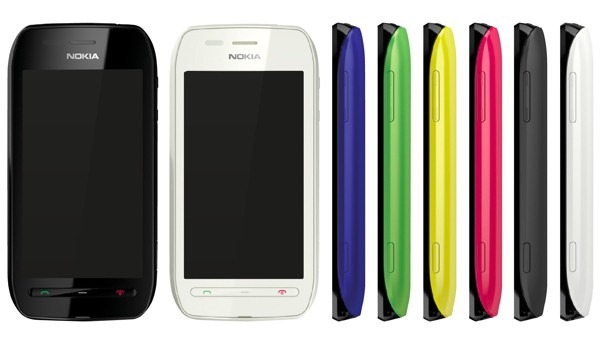
Nokia has today unveiled it’s Symbian Belle powered Nokia 603, that comes in variety of colors – 7 of them in fact to make a rainbow on posters.

Nokia 603 will be a mid-ranged smartphone, delivering the specs of a fully featured smartphone including 1 GHz processor – coupled with a 5 MP camera.

Looming with Symbian Belle, Nokia says that interface for Nokia 603 will be modern and customizable, offering up to six home screens and an extended range of widgets that can be placed in any combination the user chooses.

The browser is claimed to be four times faster than that found on previous Symbian versions, and offers enhanced compatibility with modern web standards.

Let’s take a run down on the specs.
Specification:
  • Weight: 106.9g
  • 1GHz processor
  • 3.5-inch ClearBlack display with nude resolution (640 x 360 pixels)
  • 2 GB built in memory with expandable up to 32 GB with MicroSD card
  • 5 megapixel camera with digital zoom with video shooting at 720p video at 30fps
  • Pentaband reception (WCDMA 850/900/1700/1900/2100, GSM 850/900/1800/1900)
  • Connectivity: EDGE, Bluetooth 3.0, WiFi and HSDPA 3G
  • Battery: 16 hours talktime and 490 hours in standby


The Nokia 603 will come preloaded with Angry Birds, Fruit Ninja, Shazam and YouTube to cater to your entertainment needs. On a more serious level, there’s Microsoft Office Communicator, Quick Office, Adobe PDF reader and Vlingo.

The Nokia 603 also offers NFC (near-field communications) to enable you to easily share pictures, videos and contact details; the use of a location-based services and simple, one-tap pairing with compatible accessories.
Availability and Price:
Nokia 603 won’t ship sooner than Q4 2011 – and it’s estimated price would be around Rs. 25,000.

Share

Twitter Delicious Facebook Digg Stumbleupon Favorites More